Review Management Software Under $50: What You Actually Need
Most review tools charge $100-400/mo. Here's what features actually matter, which ones are bloat, and the best options under $50.
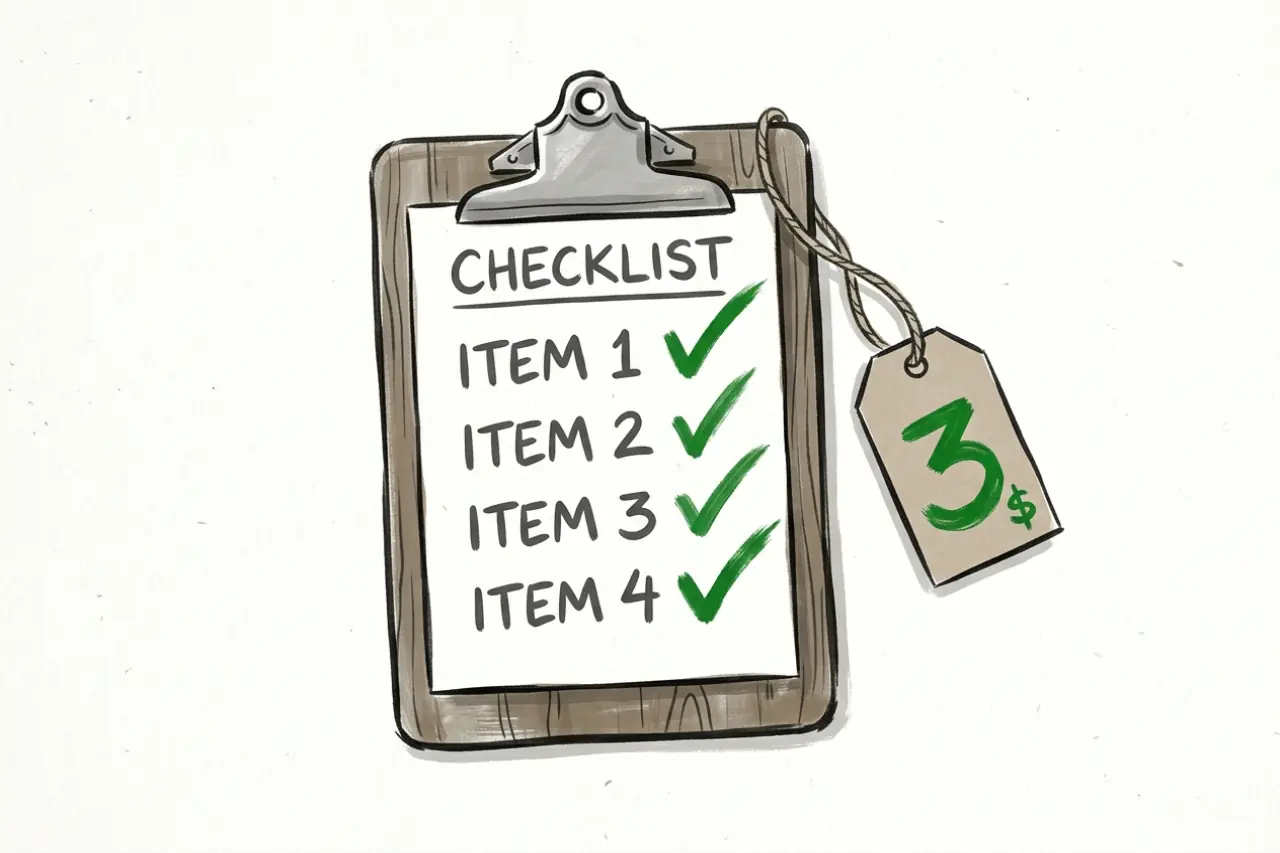
The Review Management Pricing Problem
Type "review management software" into Google and you'll find a sea of tools charging $100-500/mo. Birdeye starts at $299. Podium at $349. GatherUp at $99. Even the mid-tier options like NiceJob run $75/mo.
For an enterprise with 50 locations and a marketing budget, those prices make sense. For a local electrician, a family-owned restaurant, or a solo cleaning service, paying $300/mo to send text messages asking for reviews is hard to justify.
But here's the thing: you probably don't need 80% of what those tools offer. The enterprise platforms bundle review management with social media management, listing management, surveys, competitive intelligence, web chat, payment processing, and a dozen other features. Most small businesses use the review request button and nothing else.
So what do you actually need?
The 4 Features That Actually Matter
After looking at what every major tool offers and cross-referencing it with what real small business owners talk about on Reddit, forums, and review sites, the essential feature set comes down to four things:
1. Automated Review Requests (SMS)
This is the product. Everything else is secondary. The ability to send a text message to a customer with a link to leave a Google review. That's the core value.
Why SMS specifically? Because text messages have a 98% open rate. Emails sit at 20%. If you send a review request by email, 4 out of 5 customers will never see it. If you send it by text, virtually all of them will.
The best tools let you send this with one tap: enter the customer's phone number, hit send. Or better yet, auto-trigger it from your job management software.
2. Review Funnel (Smart Routing)
A review funnel is a simple landing page that asks the customer "How was your experience?" before sending them to Google.
If they click positive (4-5 stars), they get redirected to your Google review page. If they click negative (1-3 stars), they get sent to a private feedback form instead.
This does two things:
- It catches negative experiences before they become public 1-star reviews
- It gives you private feedback you can act on to improve your service
Some people argue this is "review gating" and violates Google's policies. The nuance: Google prohibits selectively soliciting positive reviews (only asking happy customers to review). A funnel that gives everyone the option, but routes unhappy customers to a feedback form where they can still choose to post publicly, is a gray area that most tools operate in.
3. AI Review Replies
Every review deserves a response. Potential customers read your replies almost as much as the reviews themselves. But writing thoughtful, personalized responses to every review takes real time.
AI reply tools generate a suggested response based on the review content. You read it, maybe tweak a word or two, and hit send. What used to take 5 minutes per review now takes 10 seconds.
NiceJob charges $125/mo for this feature (Pro plan only). Birdeye includes it at $299/mo. Some budget tools like Reputigo include it at $15/mo. This is one area where the price gap between tools is wild.
4. Dashboard (All Reviews, One Place)
Your reviews are scattered across Google, Yelp, Facebook, and maybe industry-specific sites. A dashboard that pulls them all into one view saves you from checking 4 different sites every morning.
You want: new review alerts, a combined rating view, and the ability to reply from the dashboard without logging into each platform separately.
What You Don't Need (But Tools Will Try to Sell You)
- Social media management. You have Instagram. You don't need your review tool posting to it.
- Listing management. Tools like Yext charge a premium for keeping your business info consistent across directories. For a single location, you can do this manually in 30 minutes once.
- Customer surveys. Nice in theory. In practice, most small businesses never set them up or look at the results.
- Competitive intelligence. Knowing that your competitor got a 3-star review last week is interesting but not worth $50/mo extra.
- Payment processing. Podium bundles this. You already have Square or Stripe. You don't need another payment tool.
- Web chat widget. Some tools include a live chat widget for your website. Unless you have someone sitting there to respond, this creates more problems than it solves.
The Best Review Tools Under $50/mo
Reputigo ($14.95/mo)
The cheapest real option. Free plan covers basic review link generation. The paid plan at $14.95/mo adds AI replies, QuickBooks integration, bulk campaigns, and a website widget.
Strengths: Price. It's genuinely affordable. Weaknesses: The product feels basic. Limited integrations. Not a lot of public reviews or case studies to build confidence.
HiFiveStar ($0-39/mo)
Free plan with basic review collection. Paid plans up to ~$39/mo add AI routing, analytics, and multi-platform support.
Strengths: The review funnel (routing happy vs unhappy customers) works well. Free tier is genuinely usable. Weaknesses: Marketing feels AI-generated. Not a lot of organic trust signals.
ReviewGrower ($9.95/mo)
Bare-bones review generation. Campaign tools, a website widget, and basic monitoring at $9.95/mo.
Strengths: The simplest, cheapest option. Weaknesses: Very new, very small. Minimal track record. No AI replies.
Embedding Google Reviews Yourself ($0)
Worth mentioning: if all you want is to display reviews on your website, you don't need any tool. Google's API lets you embed reviews for free, and services like Elfsight offer free widgets with limited customization.
This doesn't help you get more reviews. But it does help you show off the ones you have.
What $50/mo Should Get You
If you're paying $30-50/mo for a review management tool, here's what's reasonable to expect:
- Unlimited SMS review requests
- A review funnel that routes by sentiment
- AI-suggested replies for incoming reviews
- A dashboard covering Google, Yelp, and Facebook
- Basic analytics (review count trends, average rating)
- No contracts, cancel anytime
What's NOT reasonable at this price:
- Deep CRM integrations (Jobber, Housecall Pro auto-triggers)
- Multi-location management
- White-label or agency features
- Dedicated account manager
The $30-50 range is where you should get all four core features in a clean, reliable package. The problem is that very few tools actually exist in this sweet spot right now. You're either paying $15 for something basic or $75+ for something polished.
The Bottom Line
Review management isn't complicated technology. It's an SMS API, a simple landing page, a dashboard, and an AI prompt. The reason enterprise tools charge $300+ isn't because the technology is expensive. It's because they've bundled 15 other features and targeted larger businesses with bigger budgets.
If you're a small service business, you don't need 15 features. You need four. And you shouldn't have to pay enterprise prices to get them.
For a deeper look at specific competitors, check out our comparisons of Birdeye alternatives and Podium alternatives under $50. And if you're still on the fence about whether you need a tool at all, read our honest take on that question.
That's exactly why we're building Afterjob. The four features that matter, at $29/mo, built for service businesses. No enterprise bloat. Join the waitlist and be the first to try it.